
Flares happen — and they don’t mean your treatment has failed
If you’re reading this during a flare, here’s the most important thing to know up front: a flare does not mean your medication stopped working. Even patients on the best possible treatment regimen have flares. Infections, stress, hormonal changes, weather shifts, and sometimes nothing identifiable at all can trigger a flare. One flare — or even a few — doesn’t mean we need to abandon your current treatment plan.
That said, flares deserve attention. This guide will help you manage the immediate situation, decide when to call us, and document what’s happening so we can make the best decisions together.
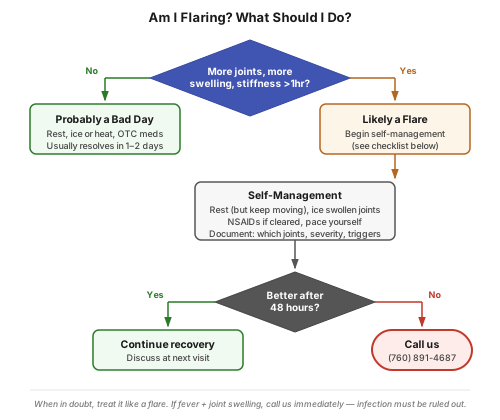
What counts as a flare vs. a bad day
Not every ache is a flare, and knowing the difference helps you respond appropriately:
- A bad day might mean a bit more stiffness than usual, a familiar joint that’s grumbling, or fatigue that’s worse than your baseline. Bad days usually resolve on their own within a day or two with rest and your usual comfort measures
- A flare means a noticeable step up in disease activity — more joints involved, more swelling, more stiffness (especially morning stiffness lasting over an hour), or a significant drop in your ability to do daily activities. Flares tend to build over days rather than resolve on their own
If you’re unsure which category you’re in, treat it like a flare — the strategies below won’t hurt you on a bad day, and they might prevent a bad day from becoming a full flare.
Immediate self-management
- Rest, but don’t immobilize — reduce high-impact activities, but keep moving gently. Complete rest leads to stiffness and deconditioning, which makes everything feel worse. Light movement — walking, gentle stretching — is better than staying in bed
- Ice for hot, swollen joints — 15–20 minutes at a time, wrapped in a cloth, several times a day. Ice helps when there’s visible swelling, redness, or warmth
- Heat for stiff, aching joints without swelling — a warm shower, heating pad, or warm paraffin dip can help loosen stiffness. If a joint is actively hot and swollen, stick with ice
- NSAIDs if they’re safe for you — if you’ve been cleared to take ibuprofen (Advil, 400–600 mg every 6–8 hours with food) or naproxen (Aleve, 220–440 mg every 12 hours with food), these can help reduce inflammation and pain during a flare. Do not take them if you have kidney problems, a history of stomach ulcers, or are on blood thinners — check with us if you’re unsure
- Topical options — over-the-counter topical diclofenac gel (Voltaren) can help with superficial joints like hands, wrists, and knees without the stomach risks of oral NSAIDs
- Pace yourself — cancel or postpone what you can. Pushing through a flare extends it
- Ask for help — let the people around you know you’re flaring. This isn’t weakness; it’s practical. Delegate what you can for a few days
If you have a pre-authorized prednisone burst on file with us, you may use it — but call to confirm the dose and duration before starting. Prednisone protocols vary based on your condition and current medications, and we may want to adjust the plan based on what’s going on. Do not start a burst without checking in first.
When to call us
Call the office — or send a message through Spruce — if any of the following apply:
- Fever plus joint swelling — this combination needs evaluation to rule out infection, which can look identical to a disease flare but requires completely different treatment
- New joints are involved — if joints that have never been a problem before are suddenly swollen and painful, that’s a change in your disease pattern that we need to know about
- You can’t do basic daily activities — if you can’t dress yourself, open jars, walk to the bathroom, or sleep because of pain, that level of impairment warrants intervention beyond self-management
- Symptoms are worsening after 48 hours — a flare that’s getting worse rather than stabilizing after two days of home management likely needs medical treatment
- You’ve been on a prednisone burst and symptoms returned as you tapered — this suggests the underlying inflammation needs more than a short steroid course
- You’re not sure — when in doubt, reach out. We would rather hear from you early and reassure you than hear from you late when the situation is harder to manage
What to document for your visit
Good documentation helps us make better decisions. When you’re flaring, try to note:
- Which joints are affected — be specific (right wrist, left knee, both hands, etc.)
- When it started — the actual date, not “a while ago”
- Severity on a 1–10 scale — your personal scale is fine; we just need to track trends over time
- Morning stiffness duration — how long does it take to loosen up after waking? Under 30 minutes is mild; over an hour is significant
- Photos — if you have visible swelling, redness, or rash, take a photo. Flares are often more impressive in the moment than they are by the time you get to the office. Photos are genuinely helpful
- What you’ve tried and whether it helped — NSAIDs, ice, rest, prednisone — and how much relief each provided
- Any possible triggers — recent illness, missed doses, stress, travel, new medications, change in sleep
Common flare triggers to be aware of
Understanding what can trigger flares helps you anticipate and sometimes prevent them:
- Infections — even a mild cold or urinary tract infection can trigger a disease flare. This doesn’t mean you did anything wrong
- Stress — physical or emotional stress is one of the most common triggers patients identify. Major life events, surgery, and prolonged sleep deprivation all count
- Missed medication doses — skipping doses — especially biologics or methotrexate — can lead to a rebound flare within days to weeks
- Weather and barometric pressure changes — many patients notice flares with cold fronts or sudden weather shifts. The mechanism isn’t fully understood, but the pattern is real
- Overexertion — doing too much on a good day can provoke a flare the next day. Pacing remains important even when you feel well
After the flare
Once the flare resolves, we’ll want to discuss whether any treatment adjustments are needed. A single flare in an otherwise well-controlled disease may not require changes. Recurrent flares — especially if they’re becoming more frequent or severe — usually mean we need to optimize your regimen.
Be honest with us about medication adherence. If you missed doses before the flare, that’s important information — not something to feel embarrassed about. We’d rather know the real picture so we can problem-solve together.
Keep in mind that recovery from a flare can take longer than the flare itself. Even after the acute inflammation settles, you may feel fatigued and stiff for another week or two. This is normal — give yourself time to return to baseline rather than jumping back into full activity immediately.
Flares are frustrating, but they’re a known part of living with autoimmune disease. Having a plan makes them less frightening and helps you get through them faster.
This handout is provided for educational purposes and does not replace individualized medical advice. Always follow the specific instructions given by your rheumatologist.