
Why vaccines matter more for you
If you take medications that suppress your immune system — methotrexate, biologics, JAK inhibitors, mycophenolate, azathioprine, prednisone, or others — your body is less equipped to fight off infections. Vaccines are one of the most effective tools we have to protect you from preventable illnesses that could be serious or even dangerous in someone on immunosuppression.
The key distinction you need to understand is the difference between inactivated vaccines (safe for you) and live vaccines (potentially dangerous while on immunosuppression).
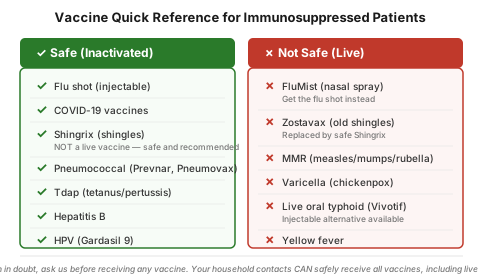
Vaccines that ARE safe
These vaccines use killed viruses, protein fragments, or recombinant technology — they cannot cause the infection they protect against, and they are safe to receive while on immunosuppressive therapy.
- Influenza (flu shot) — the injectable form only; get this every year, ideally in early fall
- COVID-19 vaccines — all currently available COVID vaccines in the US are safe for immunosuppressed patients; follow current booster guidelines
- Shingrix (shingles) — this is a recombinant vaccine, not a live vaccine; it is safe and strongly recommended (more on this below)
- Pneumococcal vaccines (Prevnar, Pneumovax) — protect against bacterial pneumonia and are specifically recommended for immunosuppressed patients
- Tdap — tetanus, diphtheria, and pertussis booster
- Hepatitis B — recommended if you haven’t been vaccinated or your immunity has waned
- HPV (Gardasil 9) — if age-appropriate and not previously completed
Vaccines that are NOT safe
Live vaccines contain weakened but active virus or bacteria. In a healthy immune system, they cause a harmless mini-infection that builds immunity. In someone on immunosuppression, that “mini-infection” can become a real infection.
Do not receive any live vaccine while you are on immunosuppressive medication without discussing it with us first. This is not a theoretical risk — live vaccines in immunosuppressed patients can cause the disease they’re meant to prevent.
- FluMist (nasal spray flu vaccine) — this is a live vaccine; get the injectable flu shot instead
- Zostavax (old shingles vaccine) — this was a live vaccine and is now largely phased out; Shingrix is the current standard and is safe
- MMR (measles, mumps, rubella) — live vaccine; if you need it, it must be given before starting immunosuppression
- Varicella (chickenpox) — live vaccine; same timing considerations as MMR
- Live oral typhoid vaccine (Vivotif) — an injectable inactivated alternative exists
- Yellow fever vaccine — live vaccine; discuss alternatives or timing if travel requires it
Timing vaccines with your medications
Ideally, we vaccinate you at least 2 weeks before starting immunosuppressive therapy — this gives your immune system time to mount a full response while it’s still functioning at full capacity.
But here’s the reality: don’t delay treatment to complete a vaccine series. If you need to start a biologic or other immunosuppressive medication now, we start it now. A partially effective vaccine is better than no vaccine, and your disease needs to be controlled. We can work around medication timing when possible, but treatment comes first.
For some medications — particularly rituximab — vaccine timing matters more because the drug specifically depletes B cells (the cells that make antibodies in response to vaccines). If you’re on rituximab, we aim to give vaccines at least 4 weeks before your next infusion or 12 to 16 weeks after your most recent dose, when B cells are beginning to recover.
Shingrix: a priority vaccine
Shingrix deserves special attention. Shingles (herpes zoster reactivation) is significantly more common in patients on immunosuppressive therapy — particularly JAK inhibitors (tofacitinib, upadacitinib) and many biologics.
- We recommend Shingrix for all immunosuppressed patients, even those under 50 — the general population recommendation starts at age 50, but the risk in immunosuppressed patients justifies earlier vaccination
- Shingrix is a two-dose series — the second dose is given 2 to 6 months after the first
- It is NOT a live vaccine — it is safe to receive while on biologics, JAK inhibitors, methotrexate, and other immunosuppressive medications
- Side effects are common but short-lived — sore arm, fatigue, and muscle aches for 1 to 2 days are normal; this is a sign your immune system is responding
Annual and routine vaccines
- Flu shot — every fall, injectable form only
- COVID booster — per current CDC guidelines, which continue to evolve
- Pneumococcal vaccines — Prevnar 20 (a single dose) or the Prevnar 15 followed by Pneumovax 23 series; your specific schedule depends on what you’ve already received — we’ll sort this out with you
- Tdap — every 10 years, or sooner if you have a wound exposure
Travel vaccines
If you’re planning international travel, talk to us 4 to 6 weeks before your trip — ideally before you even book. Some travel destinations require or recommend vaccines that are live, and we need time to evaluate alternatives or adjust your medication schedule if necessary.
Common travel vaccines and their status:
- Hepatitis A — inactivated, safe
- Typhoid injection — inactivated, safe
- Typhoid oral (Vivotif) — live, NOT safe; use the injectable form instead
- Yellow fever — live, NOT safe on immunosuppression; requires careful planning and possibly a medical waiver
- Japanese encephalitis — inactivated, safe
- Rabies — inactivated, safe
Household contacts
Good news: your family members, partners, and housemates can and should receive their recommended vaccines, including live vaccines. Vaccinating the people around you creates a protective buffer — this is called cocooning.
- Household contacts can safely receive the MMR, varicella, nasal flu spray, and rotavirus vaccines without posing a risk to you
- The one historical exception was oral polio vaccine, which could shed live virus — but oral polio vaccine is not used in the United States
The most important thing your household contacts can do for your health is stay up to date on their own vaccines, especially flu and COVID.
This handout is provided for educational purposes and does not replace individualized medical advice. Always follow the specific instructions given by your rheumatologist.